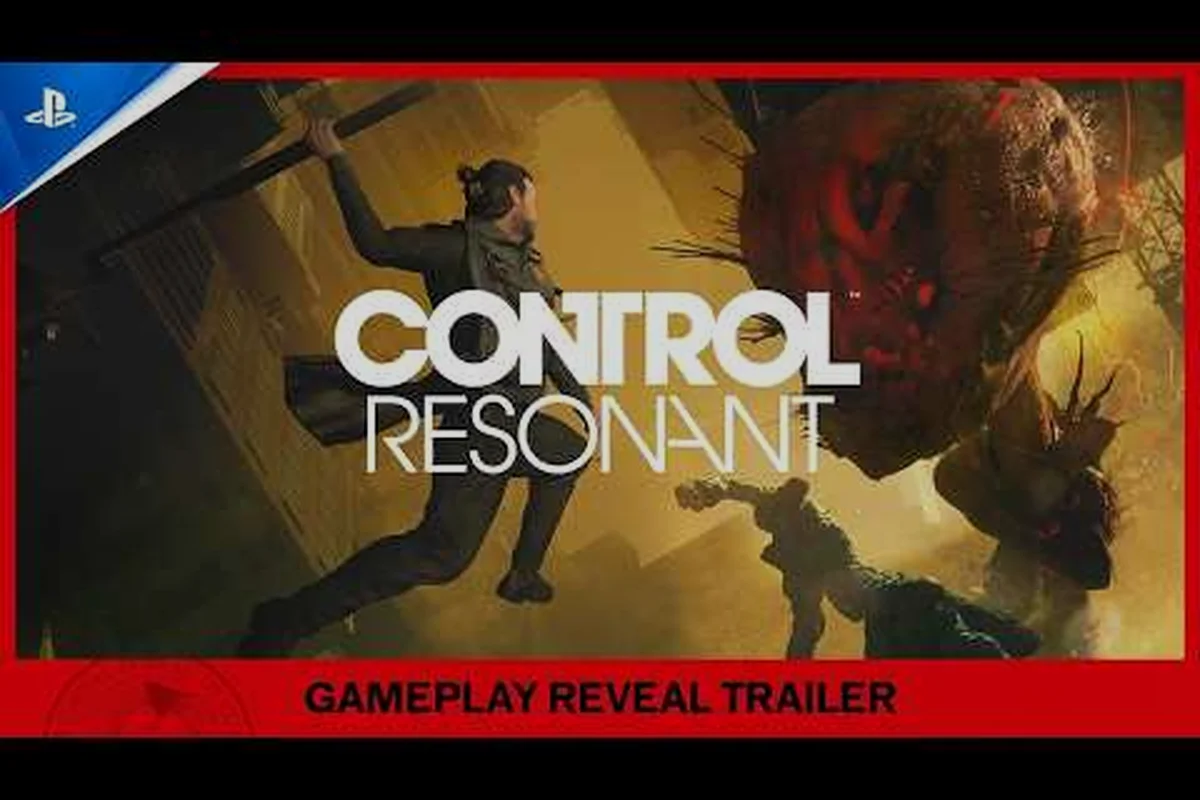
The State of Play demo for CONTROL Resonant didn't just tease a sequel—it dropped players directly into a fractured Manhattan where reality bends to the will of a cosmic intruder. Understanding the control resonant state of play gameplay is essential because it redefines the series' combat from a shooter-centric experience to a fluid melee and ability hybrid, and this breakdown covers every ability, weapon form, and movement mechanic revealed in the showcase.
The Aberrant: Mastering the Morphing Melee Weapon
The heart of the control resonant state of play gameplay is The Aberrant, a sentient weapon that shifts between distinct combat forms on the fly. Unlike the Service Weapon from the original game, The Aberrant is exclusively a melee tool, but its versatility comes from its ability to transform mid-combo. The demo highlighted two primary configurations: a heavy two-handed hammer form for staggering armored foes and a swift dual-blade form for crowd control and rapid status application.
The weapon's morphing mechanic is tied directly to the Momentum system. Each successful hit with either form builds a gauge, and at maximum Momentum, players can execute a Resonant Strike, a devastating area-of-effect blast that also briefly staggers Gravity Anomalies in the vicinity. This interplay between building Momentum with light attacks and spending it on heavy transformations creates a rhythmic combat flow that rewards aggressive play. According to the official Remedy Entertainment website, The Aberrant is described as a living weapon that evolves alongside Dylan Faden, with its forms unlocking as the story progresses through the West Incursion Zone.
| Form | Damage Type | Speed | Special Ability | Best Used Against |
|---|---|---|---|---|
| Hammer | High single-target | Slow | Guard Break | Armored Hiss, shielded enemies |
| Dual Blades | Moderate AoE | Fast | Bleed stacking | Swarms, fast-moving targets |
| Resonant Strike | Massive AoE | Instant | Staggers Anomalies | Crowd control, elite enemies |
Community testing from the demo build suggests that switching forms mid-combo preserves a portion of the combo counter, incentivizing players to weave transformations into their attack strings rather than sticking to one form. This mechanic was further detailed in the control resonant development diary posted by Remedy in early 2026, where the combat design team explained that the weapon's fluidity was inspired by character-action games rather than traditional shooters.
Momentum and the Risk-Reward Loop
The Momentum gauge is the central resource governing combat efficiency. Light attacks with either form generate Momentum, while taking damage reduces it. At full Momentum, players can either unleash a Resonant Strike or hold the transformation to enter Overcharge state, which temporarily boosts attack speed and damage at the cost of rapidly draining the gauge. This risk-reward loop was a focal point of the control resonant pc gaming show segment, where developers demonstrated how Overcharge can turn the tide in encounters with multiple elite enemies.
Players who followed the control resonant gamescom latam presentation noted that the demo build allowed for three distinct playstyle routes: raw melee power, ability-driven agility, and environmental manipulation. This confirms earlier details from the CONTROL Resonant announcement trailer that framed the game as a more flexible action-RPG compared to its predecessor. The Momentum system ensures that even within the melee power route, players are constantly making decisions about when to spend versus conserve their gauge.
Dylan Faden's Paranatural Abilities and Gravity Anomalies
Beyond The Aberrant, the control resonant state of play gameplay showcase revealed a suite of paranatural abilities unique to Dylan Faden. Unlike Jesse's Launch and Shield, Dylan's powers are themed around gravity manipulation and temporal distortion. The demo highlighted three core abilities: Gravity Well, which creates a singularity that pulls enemies together; Temporal Rift, which slows all enemies in a targeted area; and Phase Shift, a short-range teleport that can be used offensively to pass through enemy attacks.
The West Incursion Zone itself is a character in the demo. Gravity Anomalies are environmental hazards that dynamically alter the battlefield, flipping gravity or creating zero-G zones where combat plays out in three dimensions. During the control resonant summer game fest presentation, a developer-controlled segment showed Dylan using Gravity Well to cluster enemies, then activating a Gravity Anomaly to send the entire cluster floating, before finishing them with an aerial dual-blade combo. This synergy between abilities and environmental manipulation is what sets the sequel apart from the original CONTROL.
Ability Progression and Build Crafting
The demo's UI hinted at a deep progression system where players choose how their powers manifest. Each ability has branching upgrade paths: Gravity Well can be modified to either increase its pull radius or leave behind a damaging field; Temporal Rift can be upgraded to freeze enemies solid or to spread to nearby targets on kill. This system was first teased in the control resonant behind the scenes documentary, where Remedy developers discussed their goal of making every ability feel customizable to player preference.
| Ability | Base Effect | Upgrade Path A | Upgrade Path B |
|---|---|---|---|
| Gravity Well | Pulls enemies to a point | Increased radius (3m → 5m) | Leaves damaging void zone |
| Temporal Rift | Slows enemies by 40% | Freeze solid for 2s | Spreads to 2 nearby enemies on kill |
| Phase Shift | Short-range teleport | Leaves afterimage that taunts | Damages enemies passed through |
The control resonant development update from June 2026 confirmed that the full game will feature over 20 upgrade nodes per ability tree, with respec options available at safe houses scattered throughout Manhattan. This level of customization ensures that even players who favor the same ability can have wildly different combat experiences.
The West Incursion Zone: A Warped Manhattan Playground
The State of Play demo dedicated significant time to the West Incursion Zone, the primary explorable area of the game. Rather than a fully open world, Remedy has opted for large, distinct open zones connected by narrative gateways. The demo showcased three distinct districts: the Financial District, where skyscrapers have been twisted into impossible spirals; Greenwich Village, where time flows at variable speeds; and the Intrepid Museum, a floating fortress repurposed by the Hiss.
Exploration in the control resonant state of play gameplay demo relied heavily on Gravity Anomalies. These anomalies allow Dylan to walk on walls, ceilings, and even inverted surfaces to reach hidden areas. The demo showed a sequence where players had to chain multiple anomalies together to scale a collapsed bridge, using Phase Shift to cross gaps between floating debris. This traversal system is deeply integrated with combat, as anomalies can be triggered mid-fight to reposition or escape dangerous ground-based attacks.
According to the official PlayStation Blog post, the PS5 version of the game will leverage DualSense haptic feedback to convey the instability of Gravity Anomalies, with the adaptive triggers providing resistance when charging The Aberrant's heavy attacks. The post also confirmed that the Digital Deluxe Edition includes 48-hour early access beginning September 22, 2026, ahead of the worldwide launch on September 24.
Enemy Variety and Combat Encounters
The demo showcased four distinct enemy types that require different strategies. Hiss Chargers are aggressive melee units that rush the player and must be parried with a well-timed hammer swing. Hiss Weavers are ranged support units that create shielding zones for allies, demanding priority targeting. Aberrant Echoes are corrupted reflections of Dylan himself, mirroring the player's last used ability. Finally, Gravity Wraiths are ethereal enemies that phase between dimensions, only vulnerable when they attack.
| Enemy Type | Attack Pattern | Weakness | Recommended Ability |
|---|---|---|---|
| Hiss Charger | Rush → Slam combo | Parry with hammer timing | Temporal Rift to slow rush |
| Hiss Weaver | Ranged volley, shield zone | Flank with dual blades | Phase Shift behind cover |
| Aberrant Echo | Copies last player ability | Overwhelm with different form | Switch forms mid-combo |
| Gravity Wraith | Phases in/out, AoE pulse | Vulnerable during attack windup | Gravity Well to hold in place |
The control resonant pc gaming show segment also revealed that enemy encounters scale dynamically based on player performance. If a player is breezing through encounters, the game introduces Elite variants with additional modifiers, such as health regeneration or damage reflection. This adaptive difficulty ensures that the combat remains challenging without resorting to simple stat inflation.
Narrative Context: Dylan Faden's Search
While the demo focused heavily on combat, it also provided narrative context for Dylan's journey. Freed from Federal Bureau of Control custody after the events of the original game, Dylan is searching for his sister Jesse Faden, who vanished during the initial paranatural crisis that unmade downtown Manhattan. The demo's opening cutscene showed Dylan communicating with a mysterious entity through The Aberrant, which speaks in fragmented sentences and guides him toward the heart of the incursion.
The control resonant behind the scenes documentary, released as part of the control resonant development diary series, explained that the narrative team wanted to explore Dylan's perspective after years of Hiss corruption. Unlike Jesse, who was an outsider entering the Oldest House, Dylan is already deeply entangled with paranatural forces, making his relationship with The Aberrant more symbiotic than Jesse's connection to Polaris. This narrative framing was also discussed during the CONTROL Resonant game reveal, where Remedy confirmed that the story would be accessible to newcomers while rewarding longtime fans with deep lore connections.
The Cosmic Entity and Manhattan's Unmaking
The demo's final segment teased the primary antagonist: a cosmic entity referred to only as The Resonance. Unlike the Hiss, which was a corrupting frequency, The Resonance is described as a "song that unmakes reality," and its presence is what caused Manhattan to fracture into the West Incursion Zone. The demo ended with Dylan confronting a manifestation of The Resonance in the ruins of Times Square, where the entity spoke through the environment itself, warping billboards and neon signs into fragmented sentences.
This confrontation showcased the game's most visually impressive moment: a Resonant Strike executed at maximum Momentum that temporarily silenced the entity and restored a portion of Manhattan to its original state. The implication is that combat and narrative progression are intertwined, with boss encounters against The Resonance's avatars serving as major story milestones. Players who followed the control resonant gamescom latam presentation reported that the full game features five such avatars, each guarding a district of the West Incursion Zone.
Development Insights and Community Reception
The control resonant state of play gameplay reveal was the culmination of months of teasers that began with the control resonant summer game fest appearance, where Remedy first confirmed the 2026 release window. Subsequent showcases at the control resonant pc gaming show and control resonant gamescom latam gradually unveiled the combat system, with each event focusing on a different aspect of the game.
According to the Xbox Wire announcement, CONTROL Resonant is designed as a new-player-friendly entry point to the Remedy Connected Universe, while continuing story threads from CONTROL (2019). The article confirmed three distinct gameplay routes—raw melee power, ability-driven agility, and environmental manipulation—and positioned The Aberrant as the central mechanic that ties all three together. The game runs on the Northlight Engine and has a reported budget that makes it Remedy's most ambitious project to date.
The control resonant development diary series on Remedy's official YouTube channel provided deeper insight into the design philosophy behind the combat. In episode three, lead combat designer Mikael Kasurinen explained that the team wanted to move away from the "shooter with powers" template of the original and toward a "true action game" where melee combat and abilities are equally viable. This philosophy is evident in the demo's encounter design, where enemies are vulnerable to specific weapon forms and abilities rather than being generic bullet sponges.
Community Data and Player Feedback
Community reception to the demo has been overwhelmingly positive, with players particularly praising the fluidity of The Aberrant's transformation combos. According to community data gathered from the official Discord and Reddit, the most requested feature for the full release is a training mode where players can practice combos without enemy pressure. Remedy has acknowledged this feedback and hinted that a practice arena will be available at safe houses in the final build.
The control resonant development update from August 2026 confirmed that the game has gone gold and is on track for its September 24 release date. The update also revealed that a day-one patch will include additional accessibility options, including the ability to slow down combat speed for players who find the Momentum system's pace too demanding. This responsiveness to community feedback has been a hallmark of Remedy's post-launch support for CONTROL, and it appears to be continuing with the sequel.
Frequently Asked Questions
What is the main difference between The Aberrant and the Service Weapon?
The Aberrant is exclusively a melee weapon that morphs between a two-handed hammer and dual blades, whereas the Service Weapon was a ranged firearm with multiple forms. The Aberrant's combat is built around the Momentum system, rewarding aggressive play with devastating Resonant Strikes that can stagger even elite enemies and Gravity Anomalies.
How do Gravity Anomalies affect combat in the control resonant state of play gameplay?
Gravity Anomalies are environmental hazards that dynamically alter the battlefield, flipping gravity or creating zero-G zones. Players can trigger them mid-combat to reposition, escape ground-based attacks, or send clustered enemies floating for aerial combos. They are deeply integrated with traversal and combat, not just set-piece moments.
Can I respec my ability upgrades in CONTROL Resonant?
Yes, the full game features respec options at safe houses scattered throughout the West Incursion Zone. This allows players to experiment with different upgrade paths for abilities like Gravity Well and Temporal Rift without committing to a single build for the entire playthrough.
What platforms will CONTROL Resonant be available on?
CONTROL Resonant launches worldwide on September 24, 2026 for PlayStation 5, Windows PC, and Xbox Series X|S, with a macOS version arriving later in 2026. The PS5 version features DualSense haptic feedback and adaptive trigger support, while the PC version supports path tracing for high-end systems.
Is CONTROL Resonant accessible to players who haven't played the original CONTROL?
Yes, CONTROL Resonant is designed as a new-player-friendly entry point. The combat tutorial gradually introduces The Aberrant's morphing forms and Dylan's gravity abilities, while the West Incursion Zone's distinct open zones teach mechanics through exploration. The narrative is self-contained enough to follow Dylan's search without prior CONTROL knowledge.